
A Way Too Early 2030 World Cup Planning Guide
Yes, it is early. The 2026 World Cup just wrapped up, Spain is world champion, and we are already talking about 2030. That may sound a little ridiculous, but the 2030 tournament is not a normal World Cup, and for travelers thinking about attending, there are already a few things worth knowing.
First, congratulations to Spain. La Roja defeated Argentina 1-0 after extra time in the 2026 World Cup Final at New York New Jersey Stadium, earning the country its second men's world title. Spain now heads toward 2030 not only as the defending champion, but as one of the three primary hosts of the centenary World Cup.
This is FIFA's centenary World Cup, marking 100 years since the first tournament was played in Uruguay in 1930. To celebrate, FIFA is doing something it has never done before. The tournament will span six countries and three continents. Centenary celebration matches will be played in Uruguay, Argentina, and Paraguay before the tournament continues in Spain, Portugal, and Morocco.
That is a lot of geography, a lot of logistics, and eventually a lot of competition for flights, hotels, tickets, and travel packages.
The short version: you do not need to book anything today. In fact, you cannot. But if attending the 2030 World Cup is on your travel bucket list, this is the stage where it makes sense to start paying attention.
You might need a winter coat and sunscreen on the same trip
The centenary celebration matches take place in June in the Southern Hemisphere, which means winter. Montevideo, Buenos Aires, and Asunción will not feel like a typical summer soccer trip. Expect cooler temperatures, jackets, and layers.
Then the tournament shifts to Spain, Portugal, and Morocco for the heart of the competition. That means summer, and in some places, very hot summer. If you are dreaming about experiencing both the centenary matches and the main tournament, you are planning for two completely different climates within a matter of weeks.
That is worth knowing now instead of the night before your flight.
The big pieces are known. The details are not.
Spain, Portugal, and Morocco are the official hosts of the 2030 World Cup and are scheduled to stage 101 matches. Uruguay, Argentina, and Paraguay will each host one centenary celebration match, creating the first World Cup played across six countries and three continents.
Montevideo will play a particularly important role in the centenary celebration, honoring Uruguay's place in World Cup history as the host and champion of the original tournament in 1930.
The final is currently scheduled for July 21, 2030. The tournament will again use the expanded 48-team format introduced at the 2026 World Cup, which means more matches, more fan bases, and eventually significant demand in the cities selected to host them.
What we do not know yet
This is where "way too early" earns its name. We know the countries involved and the broad structure of the tournament, but the final match schedule, individual team paths, ticketing details, and official travel packages are still years away.
The final list of stadiums and exactly which matches will be assigned to each destination will also matter enormously for travelers. Until those details are locked in, early city lists and proposed venues should be treated as planning information rather than a finished itinerary.
The heat is a real factor, not just trivia
If the 2026 World Cup taught travelers anything, it is that weather needs to be part of the planning conversation. Heat became a major storyline during the tournament, and FIFA used three-minute hydration breaks midway through each half of every match.
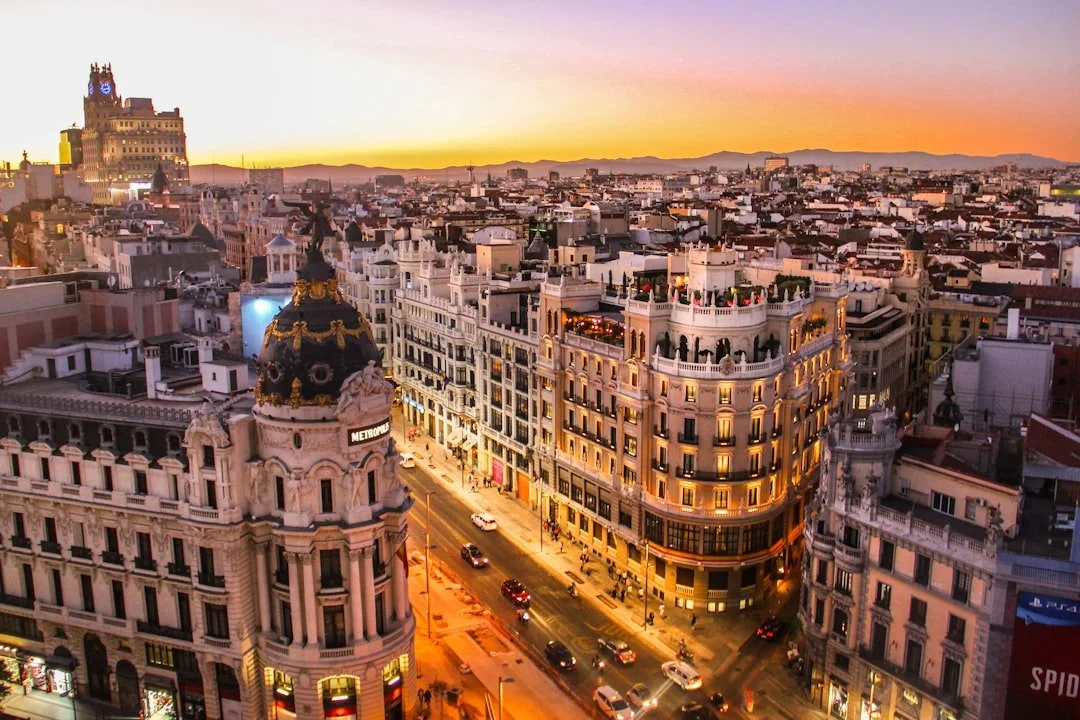
Now look ahead to 2030. A summer World Cup across Spain, Portugal, and Morocco means heat will once again be part of the experience. Some destinations will be more comfortable than others. Coastal cities may benefit from sea breezes, while inland destinations such as Madrid, Seville, and parts of Morocco can become extremely hot during the middle of the day.
Kickoff time matters too. An afternoon match can create a very different travel day than an evening match. Hotel location, transportation time, shade, hydration, and how much walking you plan to do before the match all become part of the equation.
For travelers, the takeaway is simple: plan around the conditions instead of treating the weather as an afterthought. Pack appropriately, protect yourself from the sun, stay hydrated, and check individual stadium policies before matchday.
This could be more than a one-city trip
Because the 2030 World Cup is spread across multiple countries, the trip itself becomes part of the experience. One of the advantages of the European portion of the tournament is how connected everything is. Spain's high-speed rail network links many of the country's major cities, while Portugal offers strong connections of its own. Short flights between host cities are also likely to be plentiful.
Morocco adds a completely different dimension to the experience. For many travelers, combining European matches with time in Morocco could be one of the most memorable aspects of the tournament. The South American centenary matches are where things become more complicated.
Fans hoping to experience the full centenary celebration could find themselves starting in South America before crossing the Atlantic to continue the tournament in Europe and North Africa. That is an incredible trip, but it is one that rewards thinking ahead.
A few locations are already getting attention
There are plenty of proposed stadiums and host cities to watch as 2030 planning continues. Madrid, Barcelona, Lisbon, Casablanca, and other major destinations across Spain, Portugal, and Morocco are likely to receive significant attention as FIFA moves closer to assigning matches.
The location of the final will be one of the biggest announcements still to come. Until FIFA makes that decision official, travelers should be careful about treating any proposed final venue as confirmed.
The South American portion is more straightforward: Uruguay, Argentina, and Paraguay will each stage one centenary celebration match, with Montevideo serving as the symbolic centerpiece of the 100th anniversary celebrations.
Will there be 2030 World Cup travel packages?
Absolutely, but not yet. The match schedule, ticketing process, hospitality programs, and venue assignments all need to become clearer before travel packages can be built responsibly.
Beyond the Castle Travel partners with Roadtrips for many of the world's most sought-after sporting events. Roadtrips has helped travelers experience major events such as the World Cup, Masters Tournament, Monaco Grand Prix, Super Bowl, Kentucky Derby, and other bucket-list sporting events around the globe.
While 2030 World Cup packages have not yet been released, Roadtrips is one of the organizations we will be watching closely as travel programs begin to take shape. You can also explore our broader sports travel packages, including events such as the Masters Tournament and the 2027 Women's World Cup.
Why start thinking about it now?
Because while you cannot fully plan a 2030 World Cup trip yet, you can start making the trip easier on yourself later.
This is not the kind of trip most people will want to pay for all at once. Flights, hotels, match tickets, hospitality, transportation, and time away from work can add up quickly, especially if you are looking at multiple countries or a hosted package. Starting early gives you time to think through what kind of experience you actually want and, just as important, time to start saving for it.
Some fans will pick one city and catch a couple of matches. Others will follow their team as far as they will go. And there will absolutely be people chasing the full centenary experience from the opening celebrations in South America all the way through the final.
- Do you want Spain and Portugal?
- Do you want Morocco?
- Do you want to experience the centenary matches in South America?
- Do you want to follow a specific team?
- Do you want a hosted experience or a more independent adventure?
The fans who start thinking about those questions now will have the most options when tickets and travel packages finally arrive. After all, this is not just another World Cup. It is the tournament's 100th birthday, Spain will arrive as the defending champion, and this will be a World Cup unlike anything we have seen before.
Want to be first to know when 2030 World Cup packages are released?
Beyond the Castle Travel will be tracking 2030 World Cup developments as they happen. Join our interest list and we will keep you updated as venues, ticket programs, schedules, and Roadtrips travel packages begin to take shape.
Join the 2030 World Cup Interest ListUpdated October 6, 2026. This guide will continue to be updated as FIFA confirms additional details about the 2030 World Cup.