
How to Choose the Best Seat on an Airplane: A Complete Guide by Aircraft Type
The best seat on an airplane is not simply “window or aisle.” It depends on the aircraft, the airline’s cabin layout, where the wings, doors, galleys and lavatories are located, and what matters most to you during the flight.
Seat advice is often reduced to a few broad rules: sit in front to get off quickly, choose an exit row for legroom, and avoid the last row. Those rules are useful, but they are not enough—especially on long-haul flights.
A seat that is ordinary on an Airbus A320 can be unusually spacious on a Boeing 787. A row that looks ideal on a basic seat chart may be beside a brightly lit galley where flight attendants prepare meals overnight. Two aircraft with the same model name can also feel very different because airlines choose their own seat widths, row spacing, premium cabins, lavatory positions and galley layouts.
This guide explains how to choose the best seat for your priorities while accounting for both narrowbody and widebody aircraft. It also covers the unusual “hidden gem” seats created when a cabin changes from three seats to two, leaving an aisle seat with no seat directly in front of it.
If you've searched for advice on choosing an airplane seat, you've probably seen articles that end with something like, “Enter your email to download our seat guide.”
We're not doing that.
At Beyond the Castle Travel, we believe the best travel advice should be available whether you book with us or not. We'd rather earn your business by being genuinely helpful than by asking for your email before answering a simple question.
If this guide helps you choose the right seat, that's a win. If you decide you'd like personalized recommendations for your specific flight, aircraft and itinerary, we're here when you need us.
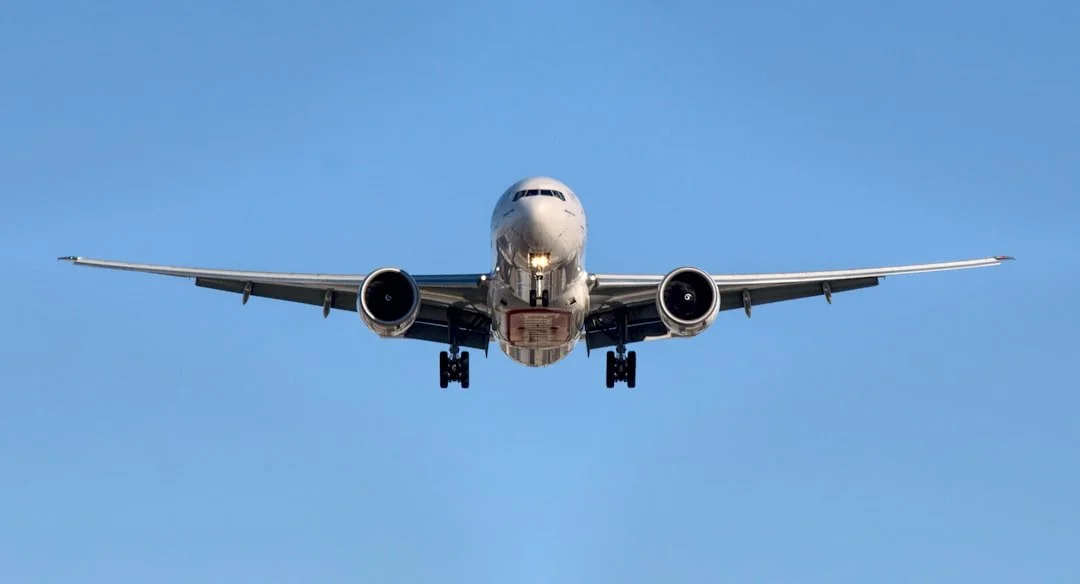
Choose a seat near the wings when minimizing motion is the priority. Choose a window for sleeping, an aisle for mobility, and a forward seat for a faster exit. Look for exit rows, bulkheads and offset rows when you need extra space—but inspect the exact aircraft seat map before paying because each of those options has tradeoffs.
Start with your real priority
There is no single best seat for every traveler. The person who wants uninterrupted sleep may hate the seat that works best for a parent traveling with a young child. A tall traveler may happily give up a window for an exit-row aisle, while someone with a tight connection may care more about being near the front than having an extra inch of pitch.
Near the wings
Seats close to the aircraft’s center generally experience less pronounced pitching than seats near the tail.
Window, away from service areas
You control the shade, can lean against the wall and will not be asked to move when someone needs the aisle.
Forward aisle
Being near the front usually matters more than choosing the aisle, although an aisle seat can help you stand and collect your belongings sooner.
Aisle
Best for travelers who stretch frequently, use the lavatory often or dislike feeling confined.
Exit, bulkhead or offset row
These can be excellent, but fixed armrests, limited storage, colder floors or nearby galleys can change the experience.
Two-seat side section
Common on certain widebodies, a pair of seats lets a couple avoid sharing the row with a stranger.
The first question: narrowbody or widebody?
Before comparing specific rows, identify the kind of aircraft operating your flight. Airlines normally show the aircraft type during booking, in the trip details or on the seat-selection screen. Equipment can change, but knowing the scheduled aircraft gives you a much better starting point.
Narrowbody aircraft
Examples include the Airbus A220, A319, A320 and A321; Boeing 737 families; and the Boeing 757. These aircraft are common on domestic, Caribbean, transcontinental and shorter international routes.
Usually 3–3One aisleFewer cabin zones
Widebody aircraft
Examples include the Boeing 767, 777 and 787; Airbus A330, A340, A350 and A380. They are common on overnight and long-haul international flights.
Two aislesMultiple cabinsMore layout variation
Narrowbody cabins are easier to understand because most economy rows repeat the same three-seat pattern on each side. Widebodies require more attention. They may have two, three or four economy seating sections across the cabin, multiple galleys, several pairs of doors, mini-cabins and transitions where the number of seats changes.
That variation is exactly why some of the best economy seats are found on widebody aircraft.
Why the same seat number can mean something completely different
Suppose two flights both offer Seat 31C. On one aircraft, it may be an ordinary aisle seat in a 3–3 narrowbody row. On another, it could be the first seat behind a galley where the row ahead has only two seats, leaving open floor space directly in front of 31C.
Aircraft manufacturers design the basic fuselage and cabin possibilities, but airlines decide how to use much of that space. The airline chooses the cabin classes, seat manufacturer, row spacing, lavatory placement, galley size and—in many cases—the number of seats across each row.
“Boeing 777” or “Airbus A350” is not a complete answer. Look for the airline, aircraft variant and exact seat map. A Boeing 777-300ER with one airline can have a different economy layout from the same model operated by another airline.
The hidden gem: an aisle seat with no seat directly in front
Some widebody cabins contain an unusually good economy seat created by a change in cabin geometry. A row ahead may have two seats along the side while the following row returns to three. The aisle seat in the three-seat row can then have a long open channel in front of it.
This can happen near a mid-cabin galley, door, emergency exit, lavatory complex or a point where the fuselage begins to narrow. It may look something like this:
FRONT OF AIRCRAFT

Row ahead:       [A] [B]       AISLE       [D] [E] [F] [G]       AISLE       [J] [K]

Following row:   [A] [B] [C]   AISLE       [D] [E] [F] [G]       AISLE       [H] [J] [K]
                         ↑
              Seat C may have no seat
                directly in front
That open area can feel like nearly unlimited legroom because your feet are not confined beneath the seat ahead. It may be sold as a standard economy seat, an extra-legroom seat or a preferred seat, depending on the airline.
Why these seats can be excellent
- No seatback directly in front of your knees or feet.
- Easy access to the aisle without stepping around another passenger.
- Potentially more usable space than the seat pitch number suggests.
- Often located near the middle of the aircraft rather than at the very back.
Why they are not automatically perfect
- The entertainment screen and tray table may be stored in a fixed armrest.
- You may need to place all belongings in an overhead bin for takeoff and landing.
- Passengers may treat the open floor area as a walkway or place to stand.
- A nearby galley can mean light, conversation, carts and meal preparation.
- A door or exit area may feel cooler during flight.
- The open space may narrow or contain equipment not obvious on a simplified seat map.
The lesson is not to blindly reserve every unusual-looking seat. It is to recognize that the best seat may be created by the surrounding layout rather than by a special cabin label.
Window vs. aisle vs. middle
| Seat position | Best advantages | Main drawbacks | Best suited for |
|---|---|---|---|
| Window | Views, wall support, control of the shade, fewer interruptions | Harder to leave the row; curved sidewalls can affect shoulder or foot space | Sleepers, photographers and travelers who rarely get up |
| Aisle | Freedom to stand, easier lavatory access, easier exit from the row | Carts and passing passengers; possible shoulder bumps; you may need to move for seatmates | Tall travelers, frequent movers and anyone who dislikes feeling confined |
| Middle | Sometimes cheaper or the only way to sit with companions | Least privacy and no direct aisle or window access | Families who want to keep a row together or travelers prioritizing price |
A window seat does not universally provide more room, and an aisle seat does not universally provide less. The aircraft wall curves inward on some rows, while aisle passengers may have more freedom for their legs but must keep their feet clear of the aisle. The exact row geometry matters.
Exit row vs. bulkhead: they are not the same
Exit-row seats
Exit rows often have additional space because passengers must have a clear path to the emergency exit. However, the amount of space varies. Some exit rows are extremely generous; others offer only a modest improvement.
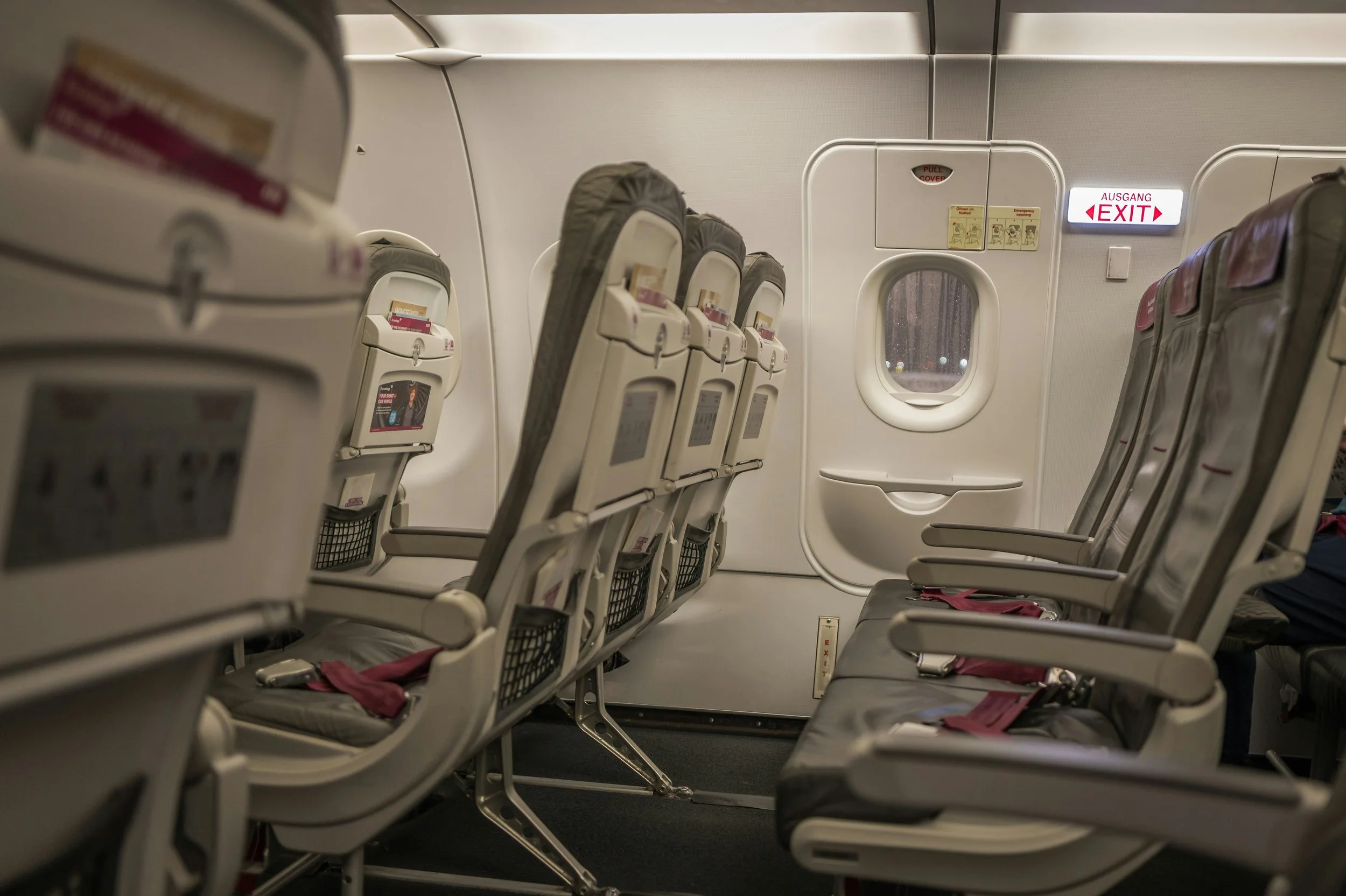
Passengers seated in an exit row must be willing and physically able to assist during an emergency. Airlines may impose age, mobility, language or other eligibility requirements. A flight attendant can reassign the seat when a passenger does not meet the requirements.
Exit-row tradeoffs can include fixed armrests, tray tables inside the armrest, no floor storage during takeoff and landing, colder temperatures near a door and limited recline in the row directly ahead of another exit row.
Bulkhead seats
A bulkhead is a wall, divider or monument separating sections of the cabin. A bulkhead row has no conventional seat immediately in front, but that does not guarantee unlimited legroom.
Some bulkheads provide excellent knee space but restrict how far you can extend your feet. Others are used for infant bassinets, making them convenient for some families but potentially less quiet for travelers hoping to sleep. Fixed armrests can also reduce usable seat width.
| Feature | Exit row | Bulkhead row |
|---|---|---|
| Extra knee space | Often, but varies | Often, but the wall may limit foot extension |
| Under-seat storage | May be restricted for takeoff and landing | Usually unavailable because there is no seat ahead |
| Eligibility rules | Yes | Normally no special emergency-assistance requirement |
| Possible bassinet position | Uncommon | Common on some long-haul aircraft |
| Seat width | Fixed armrests may reduce usable width | Fixed armrests are common |
Where turbulence usually feels least noticeable
No seat eliminates turbulence, and pilots do not always know exactly where every bump will occur. Still, the aircraft’s movement can feel more pronounced farther from its center of gravity. That is why seats near the wings often feel steadier than seats near the tail.
The front of the aircraft can also feel more comfortable than the rear, but “always sit in front for the smoothest ride” is too broad. On many aircraft, the over-wing region is the more useful target.
Start by looking for a seat over or slightly ahead of the wings. Then choose the seat position that helps you feel calm. Some travelers prefer a window so they can see the horizon; others prefer an aisle because it feels less confined.
How narrowbody aircraft differ
Airbus A220
The A220 stands apart from most narrowbody aircraft because economy is commonly arranged 2–3 instead of 3–3. That means fewer middle seats and a much higher chance of sitting by either a window or an aisle. The aircraft is also known for large windows, a relatively wide aisle and a spacious cabin feel for its size.
Best strategy: Couples should consider the two-seat side. Solo travelers who dislike middle seats also have better odds here than on a typical A320 or 737.
Airbus A319, A320 and A321 families
These aircraft are normally configured with three economy seats on each side of one aisle. The A321 is longer and can contain more cabin zones, doors and exit arrangements than the A319 or A320.
Best strategy: Check whether an exit row reclines, whether the row ahead of an exit has limited recline and whether your selected window is aligned with the seat. On longer A321 flights, proximity to a lavatory and galley matters more because passengers spend more time moving around the cabin.
Boeing 737 families
The 737 is also generally configured 3–3 in economy. The exact cabin can vary substantially by airline, especially when comparing older 737 aircraft with newer 737 MAX interiors.
Best strategy: Choose over-wing rows for a steadier feel, forward rows for a faster exit and carefully inspect exit-row recline restrictions. Avoid assuming that every window is perfectly aligned with every row.
Boeing 757
The 757 is a narrowbody, but its length and range have allowed airlines to use it on longer domestic and transatlantic routes. Some versions have multiple exit doors that create distinctive seat opportunities.
Best strategy: Look closely at door-area seats and any row where a seat is missing in front. These can provide exceptional legroom, but nearby door areas may attract standing passengers during long flights.
How widebody aircraft differ
Widebody aircraft are where generic seat advice breaks down. They can have two aisles, several economy cabins and side sections that change from three seats to two as the fuselage narrows. They also have larger galleys and lavatory complexes that may remain active for much of an overnight flight.
| Aircraft family | Common economy pattern | Potential advantage | What to inspect |
|---|---|---|---|
| Boeing 767 | Often 2–3–2 | No row needs more than one passenger to cross two seats to reach an aisle | Older interiors, galley locations and recline limits |
| Airbus A330 | Often 2–4–2 | Excellent two-seat side sections for couples | Rear taper rows, lavatories and airline-specific density |
| Boeing 777 | Commonly 3–4–3; some 3–3–3 | Large cabin with many seat-location choices | Seats across, sidewall taper, rear pairs and mid-galleys |
| Boeing 787 | Commonly 3–3–3 | Large electronically dimmable windows and modern cabin systems | Window controls, galley light and airline seat width/pitch |
| Airbus A350 | Often 3–3–3; denser layouts exist | Modern, quiet long-haul cabin with lower cabin altitude | Whether the airline uses a denser configuration and where mini-cabins begin |
| Airbus A380 | Varies by deck and airline | Very large cabin; some upper-deck economy sections feel more intimate | Which deck, side bins, stairs, galleys and lavatory traffic |
Boeing 767: one of the easiest economy layouts for couples
Many 767 cabins use a 2–3–2 economy arrangement. Couples can reserve a pair by the window without adding a stranger to the row, and even the center section places the middle passenger only one seat away from an aisle.
The tradeoff is that some 767s have older interiors. Do not judge by the aircraft model alone; check whether the airline has refurbished the cabin and whether entertainment screens, power outlets and overhead bins meet your expectations.
Airbus A330: the appeal of 2–4–2
A common A330 economy configuration is 2–4–2. The two-seat side pairs are especially attractive for couples, while a family of four may prefer the center block.
Near the rear, the fuselage may taper and side sections can change. This sometimes creates two-seat rows, offset seats or extra open space, but it may also place you closer to rear galleys and lavatories.
Boeing 777: configuration matters enormously
The 777 has a wide cabin, but airlines use that width differently. Many carriers operate 3–4–3 economy seating, while some layouts use 3–3–3. The latter usually provides more width per seat, although the entire product still depends on the airline’s chosen seat design.
Long 777 cabins can contain a substantial mid-galley. This is one place to look for offset rows and unusual aisle seats—but also where noise, light and cart movement may continue while the cabin is otherwise dark.
Boeing 787 Dreamliner
The 787 is known for large electronically dimmable windows, a lower cabin altitude than conventional older jets, improved humidity and systems designed to reduce the bumps passengers feel. These aircraft-level features can make a long flight more pleasant, but they do not make every seat equally comfortable.
Most airlines use 3–3–3 economy seating. Look for the same familiar widebody tradeoffs: window access, center-section flexibility, galleys, lavatories and bulkheads. On some flights, the crew can centrally control how dark the windows become, which matters to travelers who expect full personal control of daylight.
Airbus A350
The A350 is another modern long-haul aircraft with a lower cabin altitude, optimized humidity and a quiet cabin. Many economy cabins use 3–3–3 seating, although airlines can choose denser layouts.
The aircraft is generally a strong platform for long flights, but the airline’s seat width, pitch and cabin plan remain decisive. Compare the exact seat map rather than assuming every A350 offers the same amount of personal space.
Airbus A380
The double-deck A380 offers more variation than almost any other passenger aircraft. Economy may be concentrated on the main deck, split between decks or placed in a smaller upper-deck section depending on the airline.
A smaller upper-deck economy cabin can feel calmer and may include useful side storage bins near the windows. However, stairways, galleys and lavatories can create traffic patterns that are not obvious from a basic seat map.
787 vs. A350: which aircraft has the better seats?
Neither aircraft automatically wins because airlines install the seats. At the aircraft level, both were designed with long-haul passenger comfort in mind and can maintain a cabin altitude of roughly 6,000 feet while offering improved humidity compared with many older aircraft.
Best-known cabin feature
Very large electronically dimmable windows and turbulence-dampening technology.
Best-known cabin feature
A notably quiet twin-aisle cabin, modern lighting and a passenger-friendly long-haul environment.
The practical answer: compare the airline’s seat width, pitch, cabin density and location map. A well-configured 787 can be better than a tightly configured A350, and the reverse can also be true.
Mini-cabins: a quieter option that can be worth finding
A mini-cabin is a smaller section containing only a few rows, often positioned between premium economy and a galley or between two larger economy zones. Because fewer passengers share the space, it can feel more private and may have less through-traffic.
Do not assume it is always quieter. A mini-cabin immediately beside a galley or lavatory can still be busy. The best version combines a small number of rows with distance from major service areas.
Seats near galleys and lavatories
Galleys are not noisy every minute of a flight, but activity tends to peak before and after meal service. On an overnight flight, light can spill through curtains and crew conversations may continue after the main cabin becomes quiet.
Lavatory-adjacent seats can experience lines, door noise, flushing sounds and passengers leaning on nearby seatbacks. Odor is possible, but foot traffic and repeated door movement are often the more consistent concern.
A seat near these areas may still be worthwhile when it also provides exceptional legroom. The decision becomes a trade: more physical space in exchange for a busier environment.
Seats that may not recline
Limited-recline seats commonly appear in the last row of a cabin, immediately ahead of an exit row or in front of a wall, galley or lavatory. Seat maps may mark them, but airline diagrams are not always detailed enough to show the exact degree of recline.
This matters most on overnight flights. A seat with excellent location but little recline may be tolerable for a two-hour trip and miserable on an eight-hour flight.
Missing or misaligned windows
A seat labeled as a window seat does not always have a window perfectly aligned with it. Structural components, air-conditioning ducts and the spacing chosen by the airline can leave some rows with a partial view or a blank wall.
Travelers who choose a window specifically for scenery or photography should inspect a detailed cabin diagram and, when available, recent traveler photographs of that exact aircraft configuration.
Best seats for specific travelers
Prioritize usable leg space
Exit rows, open offset aisle seats and some bulkheads can help. Check whether fixed armrests or a wall limit your ability to stretch.
Choose window and distance
Look for a window seat several rows away from galleys, lavatories, bassinets and crew-rest access points.
Choose a complete seat block
A center group of four on a 2–4–2 widebody can work well for a family of four. On an A220, a parent and child may prefer the two-seat side.
Reduce motion and uncertainty
Choose near the wings and away from galleys. Select window or aisle according to whether seeing outside or having freedom to move feels more reassuring.
Pay attention to cabin position
A forward seat can save meaningful time on a large aircraft. Remember that arrival gate procedures and immigration lines can matter more than a few rows.
Search for side pairs
The A220, 767, many A330s and tapering rear sections on certain widebodies can provide two-seat rows.
Airplane seat myths worth retiring
Reality: The front may feel better than the rear, but seats near the wings are generally the more useful target for reducing perceived motion.
Reality: Space, recline, temperature, tray-table design and storage rules vary. Some exit rows are outstanding; others involve substantial compromises.
Reality: A wall can provide knee room while preventing you from extending your feet beneath the seat ahead.
Reality: Airlines choose their own configurations, and one carrier may operate multiple layouts of the same aircraft variant.
Reality: Usable space depends on sidewall curvature, seat supports, entertainment boxes, armrests and the exact row.
Should you pay to select a seat?
Seat-selection fees can feel frustrating, but paying may be worthwhile when the seat materially changes a long flight. The value is usually highest when you are securing a specific benefit rather than paying simply to move a few rows.
Paying may be worthwhile when:
- You need to sit with children or traveling companions.
- You are tall and can confirm meaningful extra legroom.
- You have a tight connection and a forward seat is available.
- You are taking an overnight flight and can avoid a galley, lavatory or non-reclining row.
- You found a two-seat side pair or offset seat that substantially improves the layout.
Paying may not be worthwhile when:
- The “preferred” seat is simply an ordinary seat closer to the front.
- The aircraft is likely to change and the fee does not guarantee an equivalent seat.
- The flight is short enough that the difference has little practical value.
- You are paying for an exit or bulkhead seat without confirming its restrictions.
Seven checks before clicking “confirm seat”
- Confirm the aircraft model and variant shown for your flight.
- Inspect the airline’s own seat map first.
- Identify wings, doors, galleys, lavatories and cabin dividers.
- Check whether your row reclines and whether the window is aligned.
- Look for rows where the number of side seats changes.
- Check whether an entertainment box or fixed armrest affects usable space.
- Recheck the seat map before departure in case the aircraft changes.
Frequently asked questions
What is the best seat on an airplane overall?
There is no universal best seat. A window seat near the wings and away from galleys or lavatories is a strong all-around choice for a traveler who values sleep and a steadier ride. An aisle seat is better for mobility, while a forward seat is better for a fast exit.
Where should I sit if I am worried about turbulence?
Choose a seat over or slightly ahead of the wings. Movement can feel more pronounced near the tail. No seat eliminates turbulence, but the center region of the aircraft generally feels less affected by pitching.
Are exit-row seats always worth paying for?
No. Some provide exceptional space, while others have fixed armrests, limited recline, no floor storage during takeoff and landing or increased activity near a door. Inspect the exact seat before paying.
Is a bulkhead seat better than an exit row?
It depends on the layout. A bulkhead can provide knee room but may limit foot extension. An exit row may provide more open space but includes eligibility requirements and can be colder or busier.
Which aircraft is best for couples in economy?
Aircraft with two-seat side sections are especially convenient. Common examples include the Airbus A220, Boeing 767 and many Airbus A330 configurations. Some widebody aircraft also change to pairs near the rear.
Is the Boeing 787 more comfortable than the Airbus A350?
Both are modern long-haul aircraft designed with improved cabin pressure, humidity and passenger comfort. The better experience often comes down to the airline’s seat width, pitch, cabin density and service rather than the aircraft name alone.
Why does one row sometimes have fewer seats than the row behind it?
Doors, galleys, lavatories, emergency exits and changes in fuselage width can force the cabin layout to shift. When a two-seat row sits ahead of a three-seat row, the aisle seat behind it may have unusually generous open space.
Are seats near the galley always bad?
Not always. They can be convenient and may be part of a spacious exit or offset row. The tradeoff is possible light, conversation, meal preparation and cart movement, especially during overnight flights.
What seats should I avoid on a red-eye flight?
Avoid non-reclining rows, seats immediately beside galleys or lavatories and areas where passengers gather. A window seat in a quieter section is usually best for uninterrupted sleep.
Can the airline change my aircraft after I select a seat?
Yes. Operational changes can result in a different aircraft or cabin configuration. Airlines generally try to assign a comparable seat, but the exact location may change. Recheck your reservation and seat map before departure.
Is the last row of the airplane always the worst?
No, but it frequently has disadvantages such as limited recline, more engine or galley noise, lavatory traffic and a slower exit. Some widebodies have attractive two-seat pairs near the rear, so the exact layout still matters.
What is the best airplane seat for a tall traveler?
Look for a well-reviewed exit row, an open offset aisle seat with no seat directly ahead or a premium-economy seat with confirmed additional pitch. A bulkhead may help your knees but can restrict how far your feet extend.
Choosing the flight is only part of the trip
Beyond the Castle Travel can help compare schedules, connections, aircraft and cabin options as part of planning your vacation. Our travel planning is provided without an additional planning fee.
Start Planning