
Norway Fjord Cruise Guide: Best Time, Ports, Ships and Planning
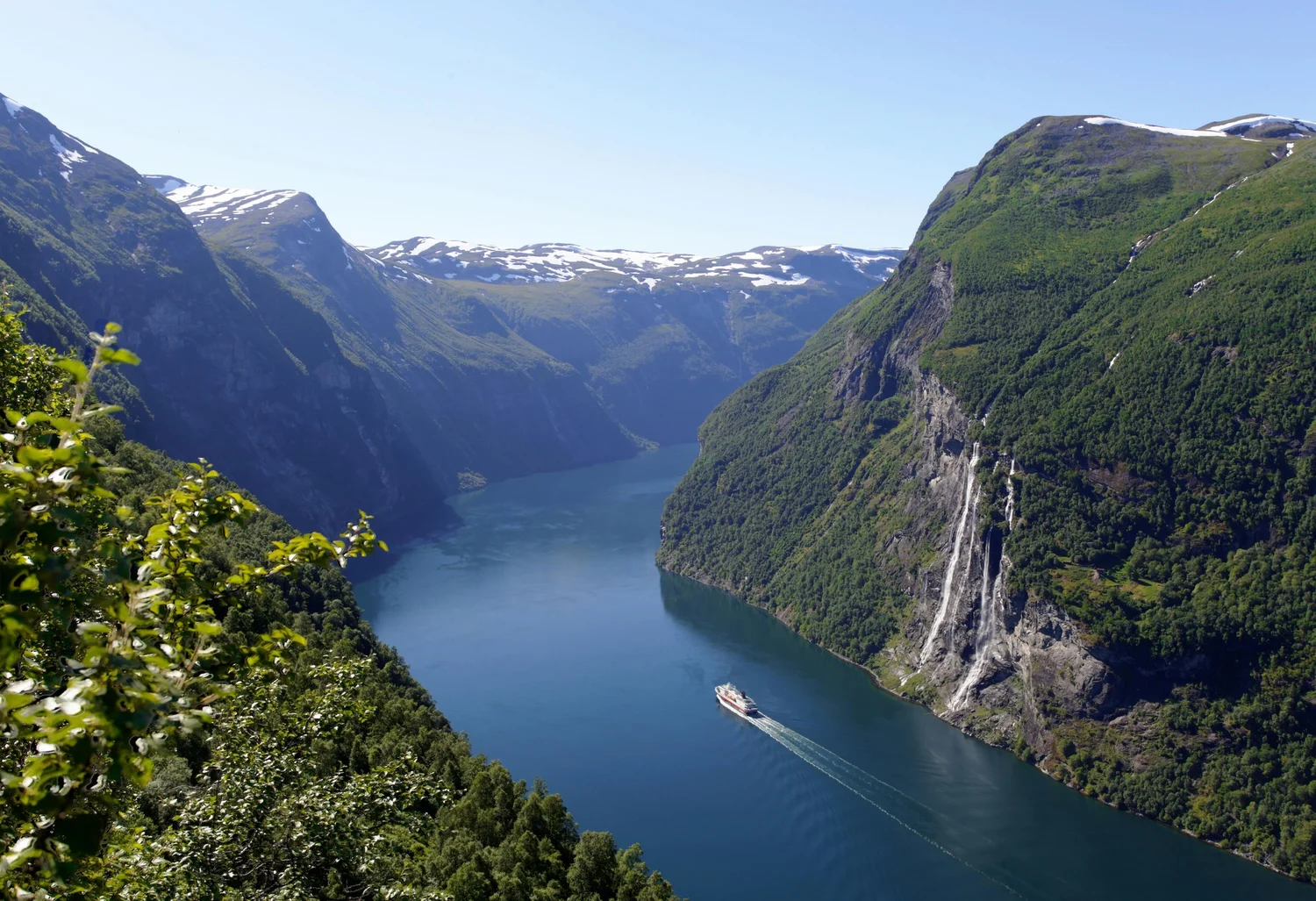
Geirangerfjord is part of the UNESCO-listed West Norwegian Fjords landscape.
A Norwegian fjords cruise is not one standard itinerary. One sailing may spend a week among western fjord villages such as Flåm, Geiranger and Olden. Another may follow Norway’s working coastal route to dozens of ports. A third may continue above the Arctic Circle toward Tromsø, the Lofoten Islands or the North Cape.
This guide explains how those routes differ, the best time to cruise the Norwegian fjords, which ports and scenic passages matter, how ship size changes the experience, when a balcony is useful, and what Norway’s new environmental rules mean for future itineraries.
What is a Norwegian fjords cruise?
A fjord is a long, deep inlet formed when the sea fills a glacial valley. Norway has hundreds of fjords, but cruise itineraries use the phrase “Norwegian fjords” broadly. The label can refer to a western Norway cruise, a longer coastal voyage, an Arctic itinerary or a Northern Europe cruise that includes only one or two Norwegian calls.
The UNESCO-listed West Norwegian Fjords property consists of Geirangerfjord and Nærøyfjord. UNESCO describes the two areas as classic examples of fjord landscapes, with narrow, steep-sided rock walls, waterfalls, glaciers, forests and mountains. They are separate fjord systems approximately 120 kilometers apart—not two names for the same place.
Western fjords
Bergen, Flåm, Geiranger, Olden, Eidfjord, Ålesund and Stavanger commonly anchor the most recognizable fjord itineraries.
Coastal route
Working coastal voyages connect cities, islands and small communities, often calling at many more ports than a conventional cruise.
Arctic Norway
Itineraries may add Lofoten, Tromsø, North Cape or Svalbard and can provide the true midnight sun in summer or darker-season aurora opportunities.
Read the day-by-day itinerary, not only the cruise title. A voyage marketed as “Norwegian Fjords” may include several deep-fjord sail-ins, or it may combine a few Norwegian ports with Denmark, Iceland, Scotland or the Baltic.
When is the best time for a Norwegian fjords cruise?
For classic western-fjords cruising, the broadest season runs from spring into early autumn. Norway can also be explored by ship in winter, particularly on coastal routes, but winter is a different product with shorter daylight, fewer seasonal attractions and a stronger emphasis on snow, coastal communities and possible Northern Lights viewing farther north.
| Travel period | What stands out | Main tradeoff |
|---|---|---|
| May to June | Powerful waterfalls from snowmelt, snow still visible on higher mountains, spring greenery and very long days | Cool or changeable weather; some high-elevation roads and activities may remain seasonal |
| July to August | Peak summer operations, broad excursion availability and long daylight across Norway | Highest visitor demand in major ports and attractions |
| September | Early autumn color, fewer visitors in some destinations and a quieter atmosphere | Reduced schedules can begin, and weather becomes less predictable |
| October to March | Winter coastal scenery, snow, darker skies and possible aurora opportunities on northern routes | Not the standard western-fjords cruise season; some roads, attractions and excursions may be unavailable |
May and June are strongest for waterfalls
Visit Norway identifies May and June as the period when snowmelt often gives waterfalls their greatest flow. The Seven Sisters in Geirangerfjord are also most clearly visible when snowmelt and rainfall provide enough water; the individual streams are not equally dramatic at all times.
The midnight sun is not a western-fjords promise
The true midnight sun occurs north of the Arctic Circle. Bergen, Flåm and Geiranger are south of that line. They still receive exceptionally long summer days, but travelers need an itinerary that continues into Northern Norway to experience the sun remaining above the horizon at midnight.
Summer is not Northern Lights season
Long daylight makes a conventional summer fjord cruise a poor choice for aurora hunting. Travelers whose priority is the Northern Lights should look at darker-season coastal or Arctic itineraries and remember that aurora activity and clear skies can never be guaranteed.
Three main Norway cruise route styles
Western fjords cruise
Usually seven to twelve nights, often from Southampton, Copenhagen, Amsterdam, Rotterdam or Bergen. The strongest versions combine several deep-fjord destinations rather than relying only on coastal cities.
- Look for Flåm, Geiranger, Olden, Eidfjord or Vik
- Compare scenic cruising passages, not only port names
- Good fit for a first Norway cruise
Hurtigruten coastal voyage
Hurtigruten’s Coastal Express is a working route that has connected Norwegian communities since 1893. It calls at many ports, some for only a short period, and differs substantially from a standard roundtrip cruise.
- Frequent ports and authentic transportation role
- Operates year-round
- Best for travelers interested in the full coast
Fjords and Arctic Norway
Longer itineraries may continue to Trondheim, the Lofoten Islands, Tromsø or North Cape. These routes can cross the Arctic Circle and create a very different trip from a western-fjords-only cruise.
- More sea days and longer overall duration
- True midnight sun possible in season
- Strong fit for coastal scenery plus Arctic culture
Norway plus Iceland or Scandinavia
Some cruises pair Norway with Iceland, Denmark, Sweden, the British Isles or the Baltic. These can be excellent journeys, but fewer days may be devoted to the western fjords themselves.
- More countries and gateway options
- Useful for travelers who want contrast
- Check how many days are actually in Norway
Norwegian fjords and ports worth comparing
Geirangerfjord
Known for steep mountain walls, the Seven Sisters waterfall, abandoned mountainside farms and panoramic viewpoints such as Ørnesvingen and Dalsnibba when roads and conditions permit.
Flåm and Aurlandsfjord
Flåm sits at the end of Aurlandsfjord and provides access to the Flåm Railway, Stegastein viewpoint and trips through nearby UNESCO-listed Nærøyfjord.
Bergen
Bryggen’s Hanseatic history, the fish market, museums and mountain viewpoints make Bergen worth additional time before or after a cruise.
Olden and Nordfjord
Olden and nearby Loen are gateways to glacial landscapes, lakes, mountain roads and the Loen Skylift. Excursion availability and glacier access vary by season and conditions.
Eidfjord
Eidfjord is often used for excursions to Vøringsfossen, mountain plateaus, orchards and Hardanger’s cultural and natural landscapes.
Ålesund
Ålesund is known for Art Nouveau architecture and can serve as a gateway to Sunnmøre scenery, islands and mountain viewpoints.
Stavanger
Stavanger combines an attractive old town with access to Lysefjord. Excursions may include scenic boats, hikes or viewpoints, but activity level and timing vary substantially.
Åndalsnes
Romsdal’s mountain scenery, the Rauma Railway and seasonal road excursions make Åndalsnes a valuable port even though it is less famous than Geiranger or Flåm.
Tromsø is not a substitute for Geiranger or Flåm. It is an Arctic city hundreds of miles farther north. Include it when you want Northern Norway, the midnight sun or darker-season aurora possibilities—not because every fjord itinerary needs it.
Which cruise style is best for the Norwegian fjords?
Norway is served by large seasonal cruise ships, small destination-focused vessels, ultra-luxury lines and coastal ships built around Norway itself. The best choice depends on the route, ship size, included services, pace and how much you value the onboard experience relative to time ashore.
Viking Ocean Cruises
Best known for: Adult-focused, destination-centered ocean ships with verandas for every stateroom and Scandinavian design.
- Strong cultural and destination emphasis
- Current Norway and Scandinavia programs extend through multiple future seasons
- Good fit for travelers wanting a quieter onboard environment
Hurtigruten
Best known for: Norway’s historic coastal route, frequent port calls, Norwegian food and a direct connection to coastal communities.
- Coastal Express operates year-round
- Signature voyages allow longer stays in selected ports
- New inner-fjords itineraries begin in 2027
Silversea and Seabourn
Best known for: Smaller luxury ships, high service levels and Northern Europe itineraries that can combine fjords with other regional destinations.
- More intimate ships than large resort vessels
- Useful for travelers prioritizing service and inclusions
- Exact ports vary widely by departure
Explora Journeys
Best known for: Contemporary, residential-style ocean cruising with spacious suites, wellness and multiple dining experiences.
- Current programs include Flåm, Geiranger and other Norwegian ports
- Relaxed modern-luxury atmosphere
- Often combines Norway with broader Northern Europe routes
Premium and mainstream ships
Best known for: Broader entertainment, more cabin categories, family facilities and a wider range of fare levels.
- Can provide strong seven-night fjord itineraries
- More onboard activity and larger guest counts
- Check tendering, port times and scenic-cruising access carefully
Expedition-influenced routes
Best known for: Smaller ships, expert interpretation and itineraries extending into Arctic Norway, Svalbard, Iceland or remote coastlines.
- Best when exploration extends beyond classic fjord ports
- May include flexible plans and more active experiences
- Not automatically the best choice for a simple western-fjords trip
Smaller is not automatically better, and larger is not automatically worse. Smaller ships may reach different ports or create a quieter atmosphere. Larger ships may offer more entertainment, family facilities and price options. The exact itinerary remains the deciding factor.
Is a balcony worth it on a Norway fjord cruise?
A balcony can be especially enjoyable in Norway because the sail-in and sail-out may be as important as the time ashore. Waterfalls, farms, villages and mountain walls can remain visible for hours, and some scenic passages occur early in the morning.
That does not make a balcony mandatory. Open decks and forward or aft observation spaces can provide wider views and make it easier to move from one side of the ship to the other. On a cold, rainy or windy day, an indoor observation lounge may be more useful than a private balcony.
| Cabin consideration | Why it matters in Norway | What to verify |
|---|---|---|
| Balcony | Private access to scenery and fresh air during long sail-ins | View obstruction, balcony size, wind exposure and whether the room faces the ocean on ships with interior-facing balconies |
| Cabin side | Scenery changes throughout the fjord and may appear on either side | Do not pay solely for port or starboard unless a specific itinerary feature justifies it |
| Motion | Fjords may be sheltered, but the voyage can include open-sea crossings | Choose lower and near midship when movement is a concern |
| Noise | Early arrivals can bring operational activity and early excursion departures | Check the deck plan above, below and beside the room |
| GTY assignment | A lower fare may come with no control over deck, location or view | Only choose a guarantee cabin when every permitted assignment would be acceptable |
For a more detailed cabin comparison, use the complete cruise cabin guide.
Norway fjord excursions worth planning early
Flåm Railway
The railway climbs approximately 20 kilometers from sea level in Flåm to Myrdal at 867 meters, passing waterfalls, mountain scenery and 20 tunnels. Popular departures can fill during cruise calls.
Waterfalls and viewpoints
Boat-level scenery, kayaking, Ørnesvingen and higher viewpoints create different perspectives. Road access and visibility depend on weather and seasonal conditions.
Glacial landscapes
Options may include Briksdal-area scenery, lakes, mountain roads or the Loen Skylift. Glacier walks should only be booked with qualified operators and are always condition-dependent.
Vøringsfossen and Hardanger
Waterfall viewpoints, mountain plateaus, farms and orchards can create a broader look at the Hardanger region beyond the port itself.
Lysefjord by boat or trail
Scenic boat trips are more accessible than strenuous hikes. Preikestolen and other hikes require sufficient port time, fitness, weather planning and reliable transportation.
City time before or after the cruise
Bergen deserves more than a rushed transfer. Bryggen, museums, seafood, mountain viewpoints and rail connections make it one of the strongest extension cities.
Do not book every port as an all-day bus tour. Norway’s strongest days often combine one major viewpoint or activity with time near the water. Long coach rides can be worthwhile, but compare the time spent traveling with the time spent experiencing the destination.
What Norway’s World Heritage fjord rules mean for cruise travelers
Norway has adopted zero-emission requirements for passenger vessels operating in the World Heritage fjords. The requirements began on January 1, 2026, for passenger ships under 10,000 gross tonnage. They begin on January 1, 2032, for passenger ships of 10,000 gross tonnage and above.
The rules also allow biogas as an alternative fuel and require ships to use shore power where facilities are available. These provisions apply specifically to the World Heritage fjords and are intended to reduce emissions in the protected Geirangerfjord and Nærøyfjord areas.
Large cruise ships were not universally banned from Geiranger in 2026. The 2026 threshold applies to vessels under 10,000 gross tonnage; the requirement for larger passenger ships begins in 2032. Cruise-line deployments can still change because of compliance decisions, port capacity, local rules and commercial planning.
For travelers, the practical lesson is to verify the current itinerary rather than relying on an old brochure or assuming that a ship will make the same call every year. Port substitutions and scenic-cruising changes can occur even after booking.
How to plan a Norwegian fjords cruise well
Compare the actual fjords
- Count deep-fjord ports and scenic passages
- Separate coastal cities from true inner-fjord calls
- Check whether Geiranger, Flåm, Olden or Eidfjord is included
- Confirm tender versus dock arrangements
Review port timing
- Long sail-ins can begin before breakfast
- Short calls can limit independent excursions
- Railway, skylift and small-group capacity can sell out
- Late arrivals affect viewpoint and road options
Plan the gateway
- Arrive at least one day before embarkation
- Consider extra nights in Bergen, Oslo or Copenhagen
- Account for open-jaw flights on directional voyages
- Check transfer distance when the port is outside the named city
Pack for changing weather
- Waterproof outer layer
- Warm layers for open decks and viewpoints
- Comfortable shoes with dependable traction
- Sun protection and binoculars
How far ahead should you book?
Book early when a particular itinerary, accessible room, connecting setup, suite or cabin location is important. Waiting can still work for flexible travelers, but the remaining choices may involve less desirable cabin locations or a different route than the one you originally wanted.
Do not assume that booking early guarantees the lowest eventual fare. Promotions and pricing can change. The practical benefit of planning ahead is access to more choices and enough time to coordinate flights, hotels, excursions and travel protection.
Compare Norway with other cruise styles
Norwegian Fjords Cruise FAQ
Find the Norway cruise that fits your priorities
Beyond the Castle Travel can help compare fjord itineraries, coastal voyages, ship styles, cabin locations, flights, hotels and excursions. Planning is fee-free.
Explore Ocean Cruises Request Norway Cruise Options