
Best Time to Take a Yangtze River Cruise
The best time to take a Yangtze River cruise is not simply the month with the mildest weather. It is the season that best fits the river experience and the rest of your China itinerary.
Travelers often begin with the calendar because it feels like the easiest decision to make. Spring sounds comfortable. Summer sounds green. Fall sounds balanced. Winter sounds quiet. All of those descriptions can be true, but none tells the whole story.
A Yangtze cruise is rarely an isolated vacation. It is often paired with Beijing, Shanghai, Xi’an, Chengdu, or another part of China, which means the right season has to work for more than the river alone. The best choice depends on how you handle heat, how much you value greener scenery, how comfortable you want land touring to feel, and whether your travel dates are flexible.
What is the best time for a Yangtze River cruise?
Spring and fall are usually the easiest seasons to recommend because they tend to offer the strongest balance of comfortable sightseeing, attractive scenery, and a manageable pace for a broader China trip. Summer can still work well for travelers tied to school breaks or warmer travel windows, while winter is better suited to travelers who deliberately prefer a quieter, cooler experience.
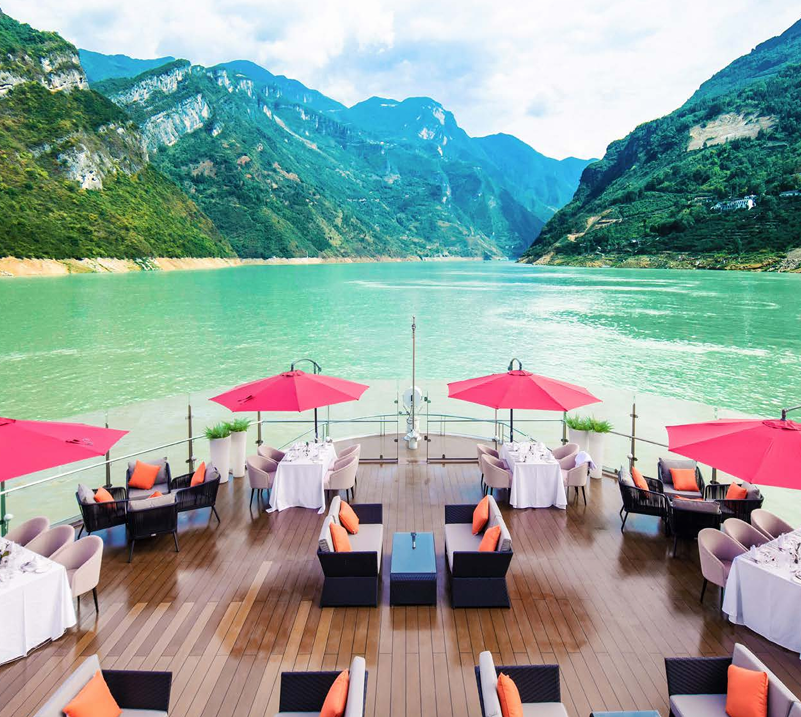
Spring is often the strongest choice for travelers who want balance.
Spring is appealing because it usually supports the kind of trip many first-time China travelers imagine: milder touring weather, renewed greenery, and enough seasonal energy to make the river feel fresh without the heavier heat associated with midsummer.
The value of spring becomes even clearer when the cruise is part of a larger itinerary. Walking through historic sites, spending time in major cities, and moving between airports, stations, hotels, and excursions can all feel easier when temperatures are moderate. A day that would feel routine in mild weather can become exhausting when heat and humidity are added.
Spring also tends to work well for travelers who care about scenery but do not want their entire decision to depend on the river being at its greenest. The landscape can feel lively and visually appealing while the overall trip remains comfortable enough for active sightseeing.
That does not mean every spring day will be perfect. Weather can shift, rain is possible, and early-season departures can feel different from later ones. The point is not that spring guarantees ideal conditions. It is that the season often creates the fewest compromises across the complete journey.
Summer offers lush scenery, but comfort becomes more personal.
Summer can make the Yangtze corridor feel especially green and visually dramatic. For travelers who enjoy warm weather, travel during school breaks, or have limited date flexibility, that can be a meaningful advantage.
The tradeoff is that heat and humidity can affect more than time onboard. The cruise may still provide comfortable indoor spaces and a stable cabin, but the broader trip can include long sightseeing days, outdoor attractions, transfers, and city touring before or after the river.
Summer is not automatically a poor choice. It simply requires more honest planning around energy, clothing, hydration, and the pace of the land itinerary.
A warmer season can still be the right season.
Travelers sometimes reject summer too quickly because it is not the easiest weather window. That can be a mistake when summer is the only time the entire group can travel or when the schedule allows a longer, less compressed itinerary.
A well-paced summer trip may be more enjoyable than a rushed spring or fall trip. Longer stays, strategic indoor breaks, and avoiding unnecessary back-to-back travel days can offset some of the seasonal strain. The important question is not whether summer is universally ideal. It is whether the trip has been designed for summer rather than simply placed there.
Travelers deciding whether the river deserves several days of a larger China itinerary should also read Is a Yangtze River Cruise Worth It? The answer depends partly on whether the cruise provides the pace and perspective you want from the complete trip.
Summer can therefore be a strong option for families, teachers, multigenerational groups, and anyone whose travel calendar matters more than achieving the mildest possible conditions.
Fall is another easy season to recommend for a well-rounded trip.
Fall often appeals to travelers for the same broad reason as spring: it can support both river cruising and land touring without forcing the trip to revolve around extreme weather.
The atmosphere can feel calmer and more settled after the height of summer. For many travelers, that creates a trip that feels balanced rather than rushed. Time on the river remains scenic, while city touring and excursions may feel easier than they do during the hottest part of the year.
Fall is especially attractive for travelers who are not chasing one specific seasonal image. They may care more about the complete experience—comfortable walking, manageable travel days, scenic sailing, and enough energy left to enjoy the evening—than about seeing the river at its greenest.
This is why fall can be one of the simplest recommendations for first-time visitors. It does not guarantee perfect weather, but it often supports a China itinerary with fewer seasonal tradeoffs.
Winter is more specialized, but it should not be dismissed automatically.
Winter is not usually the first season travelers picture when they imagine the Yangtze. The scenery may not have the same lush appearance associated with warmer months, and cooler conditions can change how much time guests want to spend outdoors.
For some travelers, however, that is part of the appeal. Lower-season travel can feel quieter and more distinctive. Someone who dislikes heat, prefers fewer people, or is building the cruise around a specific land itinerary may find that winter works better than a general recommendation suggests.
The question is whether the traveler wants a classic first impression of the river or a more niche seasonal experience. For most first-time visitors, spring or fall remains easier to recommend. Winter is more useful when there is a clear reason for choosing it rather than simply selecting the lowest available fare.
Choose the season for the full China itinerary.
The biggest mistake is evaluating the Yangtze in isolation. A traveler may find a month that looks excellent for scenic sailing but less appealing for the cities and land experiences surrounding it.
If the trip includes Beijing, Shanghai, Xi’an, or Chengdu, think about how much walking and outdoor touring the land portion requires. Consider whether the itinerary includes several internal flights or train journeys, how quickly the trip moves, and whether the cruise sits at the beginning, middle, or end.
The placement of the cruise can matter as much as the season. A quieter river segment in the middle of a demanding itinerary can provide welcome breathing room. The same cruise at the beginning may set a slower tone, while placing it at the end can create a more relaxed finish.
Travelers also need to decide whether they want the river to be the main event or one part of a more comprehensive journey. The Yangtze River Cruise vs. China Cruise Tour comparison explains how that decision changes hotels, transportation, pacing, and the number of cities included.
Start with the compromise you are most willing to make.
Every season involves a tradeoff. Spring may be comfortable but still variable. Summer may be lush but hotter. Fall may feel balanced but may not align with every traveler’s schedule. Winter may be quieter but less visually familiar.
The decision becomes easier when you identify which compromise matters least to you. A traveler who dislikes heat may happily accept cooler mornings. Someone who values green scenery may accept humidity. A family tied to school calendars may prioritize a longer summer trip over theoretically better weather during a week when they cannot travel.
Spring is often best for:
Travelers seeking a comfortable overall balance, especially when the cruise is paired with active touring in major cities.
Summer is often best for:
Travelers with fixed vacation schedules, those who enjoy warmer weather, and groups willing to plan around heat and humidity.
Fall is often best for:
Travelers wanting comfortable sightseeing and a well-rounded river-and-land itinerary without the center of summer heat.
Winter is often best for:
Travelers deliberately seeking a quieter, cooler, lower-season experience and who understand that the river will feel different from spring or summer.
So, when should you take a Yangtze River cruise?
For most first-time travelers, spring and fall offer the most balanced answer. They tend to support comfortable sightseeing, an appealing river experience, and a broader China itinerary that does not have to be organized around managing seasonal extremes.
Summer remains a valid choice when schedule, school breaks, or group availability matter most. Winter can work when a traveler intentionally wants a quieter and cooler trip.
The best time is therefore not one universal month. It is the point where weather, scenery, pace, and the rest of the China journey line up with the way you actually want to travel.
Related China river cruise guides
Ready to compare Yangtze sailings and China cruise tours?
Beyond the Castle Travel can help compare the season, river itinerary, ship, cabin, and land arrangements around the way you want to experience China.
Explore China River CruisesDouble-click to edit...