
Great Lakes Cruise Ports Guide: Top Cities and What Travelers Should Expect
Great Lakes cruises connect major waterfront cities, historic islands, engineering landmarks and remote natural areas across the United States and Canada. The ports matter, but the way they are combined matters even more.
One itinerary may travel between Toronto and Duluth while visiting all five Great Lakes. Another may focus on Lake Michigan and the Upper Peninsula, spend more time in Georgian Bay or continue through the St. Lawrence Seaway to Montréal and Québec City. Even cruises of a similar length can deliver very different experiences.
This guide explains the Great Lakes cruise ports travelers see most often, what makes each region distinct and how to compare routes before choosing a sailing. Travelers who are still deciding whether this style of cruise fits them can begin with our broader guide to Great Lakes cruises and small-ship itineraries.
Why Great Lakes cruise ports vary so much
The Great Lakes are not one compact destination. Together, the lakes stretch across a vast region and connect through rivers, canals and locks. Ship size, voyage length, immigration requirements, weather and the operator’s style all influence which ports appear on an itinerary.
Expedition-style ships may combine larger cities with national marine parks, remote shorelines and scenic cruising. Boutique coastal ships often emphasize history, culture and smaller communities. Some routes cross between the United States and Canada, while newer domestic itineraries remain entirely within U.S. waters and ports.
The lakes can also experience changing weather and open-water conditions. Most sailings are planned for the warmer months, but travelers concerned about motion should also read what Great Lakes cruises are really like in rougher water before choosing a ship or season.
Major gateway cities and urban ports
Chicago and Milwaukee
Chicago and Milwaukee are two of the most recognizable western gateways to the Great Lakes. Depending on the itinerary and cruise line, either city may be used for embarkation, debarkation or an included hotel stay.
Chicago offers major museums, architecture, dining and extensive air service. Milwaukee is smaller and easier to navigate, with a strong lakefront identity, the Milwaukee Art Museum, the Harley-Davidson Museum and a compact downtown. Travelers should check the precise boarding location because a cruise marketed around Chicago may use a nearby port or ground transfer rather than docking in the center of the city.
Toronto, Port Colborne and Niagara Falls
Toronto is one of the most common Canadian gateways and a practical place to add a pre- or post-cruise stay. Its airport access, neighborhoods, dining and waterfront make it more than a simple turnaround point.
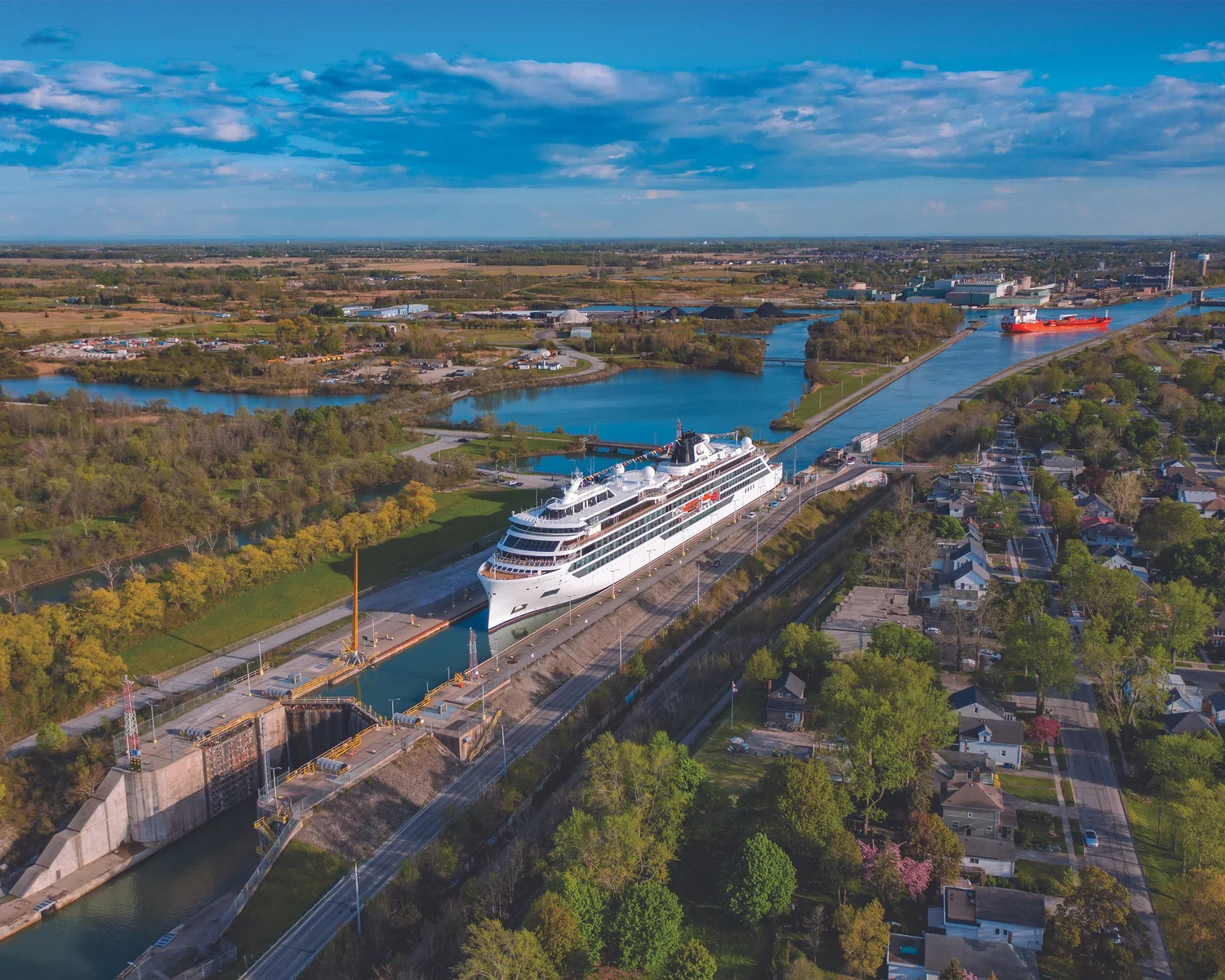
Niagara Falls is often reached as an excursion rather than by docking beside the falls. Port Colborne sits near the southern end of the Welland Canal, the lock system that allows ships to move between Lake Erie and Lake Ontario while bypassing Niagara Falls. An itinerary that includes the canal gives travelers a close look at one of the engineering systems that makes Great Lakes cruising possible.
Detroit and Cleveland
Detroit and Cleveland give Great Lakes itineraries a stronger urban and cultural dimension. Detroit excursions may focus on automotive history, Motown, architecture or the city’s riverfront. Cleveland is best known to many travelers for the Rock & Roll Hall of Fame, but its museums, markets and Lake Erie setting also make it a worthwhile port.
These cities can be especially appealing to travelers who want recognizable attractions mixed into a route that also includes islands, canals and smaller communities.
Duluth and Thunder Bay
Duluth and Thunder Bay anchor many Lake Superior itineraries. Duluth has a working harbor, lakewalk, maritime history and access to Minnesota’s North Shore. Thunder Bay introduces travelers to the Canadian side of Lake Superior, with dramatic landscapes, regional history and nearby outdoor areas.
Routes that reach these northern ports generally feel more scenic and expedition-oriented than shorter voyages centered on Lakes Michigan, Huron, Erie and Ontario.
Islands, locks and smaller communities
Mackinac Island
Mackinac Island is one of the signature stops in the region. Cars are not permitted on the island, so visitors explore on foot, by bicycle or by horse-drawn carriage. Fort Mackinac, the Grand Hotel, historic streets and waterfront views give the port a character that feels very different from the major cities elsewhere on the route.
Because it appears on many itineraries, Mackinac Island is often treated as a must-see port. It is still worth comparing how much time each cruise spends there and which excursions are included.
Sault Ste. Marie and the Soo Locks
The Soo Locks allow vessels to travel between Lake Superior and the lower Great Lakes despite the change in elevation. Some itineraries call at Sault Ste. Marie on the U.S. or Canadian side, while others feature the lock transit primarily as a scenic sailing experience.
For travelers interested in maritime history and engineering, the locks may be as memorable as any traditional port day.
Georgian Bay and Manitoulin Island
Georgian Bay brings a more natural and intimate feel to a Great Lakes voyage. Depending on the ship, an itinerary may visit Parry Sound, Midland, Little Current, Manitoulin Island or more remote scenic areas.
The region is known for rocky shorelines, pine-covered islands, Indigenous culture and smaller waterfront communities. Travelers who prioritize scenery and regional depth should look closely at how many days the itinerary gives this part of Ontario rather than treating every Georgian Bay route as interchangeable.
Door County, Alpena and Lake Superior ports
Door County and Green Bay can add Wisconsin history, coastal scenery and smaller-town character. Alpena is closely connected to Great Lakes maritime heritage and shipwreck history. Longer Lake Superior routes may add Marquette, Houghton, Bayfield or other ports that are rarely part of a traditional North American vacation.
These less famous stops are often what make one itinerary stand out from another. They can also determine whether the trip feels more like a city-focused cruise, a cultural coastal voyage or a true freshwater expedition.
The main Great Lakes itinerary styles
Cruise lines revise routes from season to season, so travelers should always compare the exact departure rather than relying only on a general cruise name. For the 2026 season, the market includes all-five-lakes expeditions, Great Lakes and Georgian Bay voyages, St. Lawrence extensions and newly introduced all-U.S. routes.
| Itinerary style | Ports and regions commonly included | Best suited for |
|---|---|---|
| All five Great Lakes | Toronto or Niagara, Detroit, Mackinac Island, Georgian Bay, the Soo Locks, Thunder Bay and Duluth | Travelers who want the broadest possible overview and a more expedition-oriented journey |
| Great Lakes and Georgian Bay | Milwaukee, Mackinac Island, Sault Ste. Marie, Little Current, Parry Sound, Midland and Toronto | Travelers who value smaller ports, Canadian scenery and a more compact route |
| Great Lakes and St. Lawrence | Great Lakes ports followed by Kingston, Montréal, Québec City or additional Seaway destinations | Travelers who want a longer voyage with more Canadian history and major cities |
| All-U.S. Great Lakes | Routes may include Buffalo, the Thousand Islands, Detroit, Mackinac Island, Milwaukee, Green Bay and Upper Peninsula ports | Travelers who prefer a domestic itinerary without crossing the U.S.-Canada border |
Viking continues to offer expedition-style journeys that can span all five lakes. Pearl Seas operates Great Lakes, Georgian Bay and St. Lawrence routes aboard a smaller coastal ship. Victory Cruise Lines focuses on boutique voyages through the Great Lakes and surrounding waterways. American Cruise Lines introduced its first all-U.S. Great Lakes season in 2026, creating a distinct option for travelers who prefer a fully domestic route. PONANT, Hapag-Lloyd and other expedition operators may also offer select seasonal departures.
The cruise line is important, but the route should come first. Travelers can compare the broader differences among small-ship, coastal and expedition experiences on our Great Lakes cruise lines, ships and routes page.
Which ports fit your interests?
- For major museums and city stays: Chicago, Toronto, Detroit, Cleveland and Milwaukee
- For maritime history and engineering: Sault Ste. Marie, the Soo Locks, Port Colborne, the Welland Canal and Alpena
- For scenery and nature: Georgian Bay, Manitoulin Island, Thunder Bay, Lake Superior and Door County
- For classic Great Lakes character: Mackinac Island, Parry Sound, Little Current and smaller Michigan or Wisconsin ports
- For a longer Canadian journey: Kingston, Montréal, Québec City and the St. Lawrence Seaway
- For a domestic U.S. route: Buffalo, Thousand Islands ports, Detroit, Mackinac Island, Green Bay, Milwaukee and the Upper Peninsula
Most travelers will not find one sailing that includes every port on their wish list. A better goal is to identify the two or three experiences that matter most and choose the route that gives them enough time and context.
What to compare before booking
- The actual embarkation and debarkation locations, including any hotel or motorcoach transfer
- How many lakes the itinerary visits and how much time is spent scenic cruising
- Whether the route enters Canada and what documentation travelers will need
- The number of included excursions and how active they are
- Ship size, stabilization, cabin design and private-balcony availability
- Whether Niagara Falls is an included excursion, an optional tour or a pre-cruise experience
- How much time is allocated to Mackinac Island, Georgian Bay and other priority stops
- Airfare options and the value of arriving at least one day before embarkation
Frequently asked questions
Which Great Lakes itinerary fits you best?
Beyond the Castle Travel can help compare routes, ships, ports, cabin options and inclusions before you choose a sailing. Our cruise-planning support is fee-free.