
Yes, You Can Actually Go to the North Pole: What an Icebreaker Expedition Is Really Like
High Arctic Expedition Planning
Most travelers do not realize that civilians can sail all the way to the Geographic North Pole.
When people picture polar travel, they usually think of Antarctica or a Svalbard cruise focused on polar bears. A much smaller number of travelers go farther north, all the way to 90 degrees north, where every direction is south.
This is not a sightseeing flight over the Arctic. The trip is made aboard a purpose-built passenger icebreaker that can move through pack ice far beyond the range of a standard expedition ship.
There has also been an important change in how these trips operate. Poseidon Expeditions once offered the best-known North Pole voyage aboard the Russian nuclear icebreaker 50 Years of Victory, departing from Murmansk and visiting Franz Josef Land. Poseidon has not operated that itinerary since 2022, so older articles describing it no longer reflect the trip currently available.
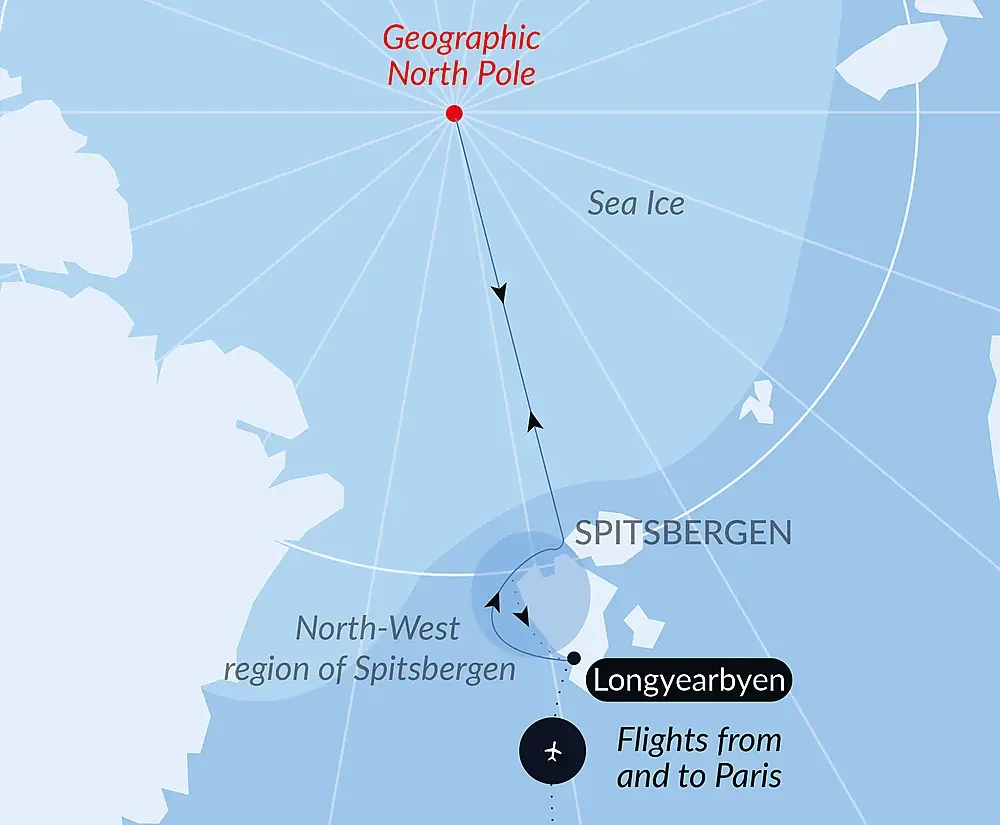
Today, travelers can reach the Geographic North Pole with PONANT aboard Le Commandant Charcot, sailing from Longyearbyen in Svalbard. The route, ship, and onboard experience are different from the former Poseidon voyage, which is useful to know when comparing older reviews with current departures.
Why reaching the North Pole requires an icebreaker
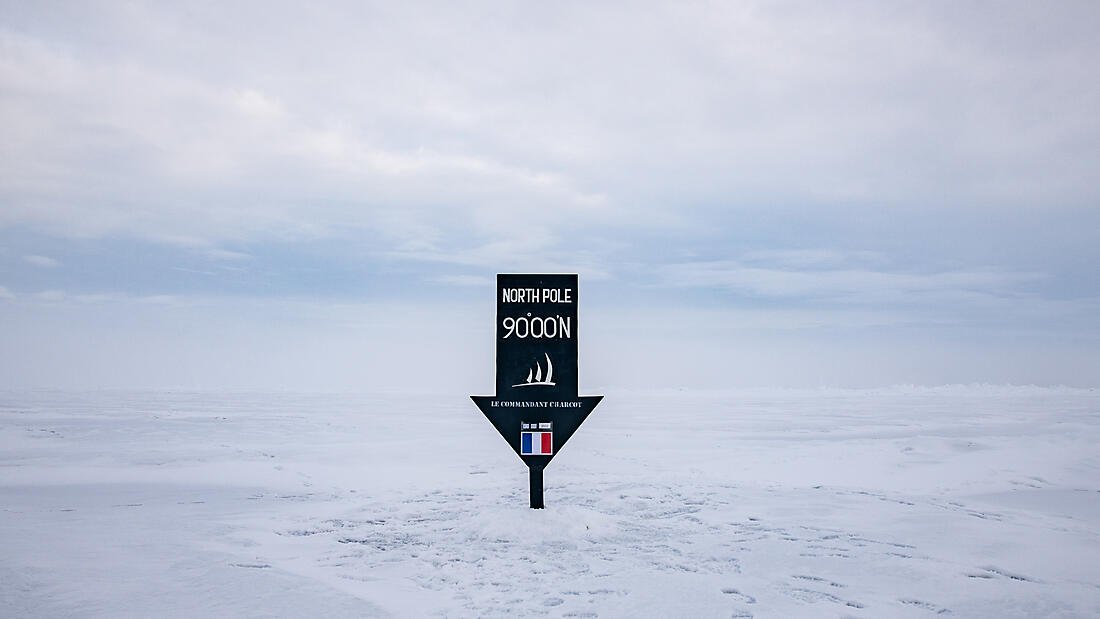
The Geographic North Pole is located in the Arctic Ocean, not on land. There is no island, port, permanent marker, or fixed piece of ice at 90 degrees north. The sea ice drifts with the wind and ocean currents, so the ship's navigation team must keep recalculating the exact position.
Ice-strengthened expedition ships can operate around places such as Svalbard and Antarctica, but they are not necessarily built to push through the heavy pack ice found this far north. A North Pole voyage requires a ship designed for high polar navigation.
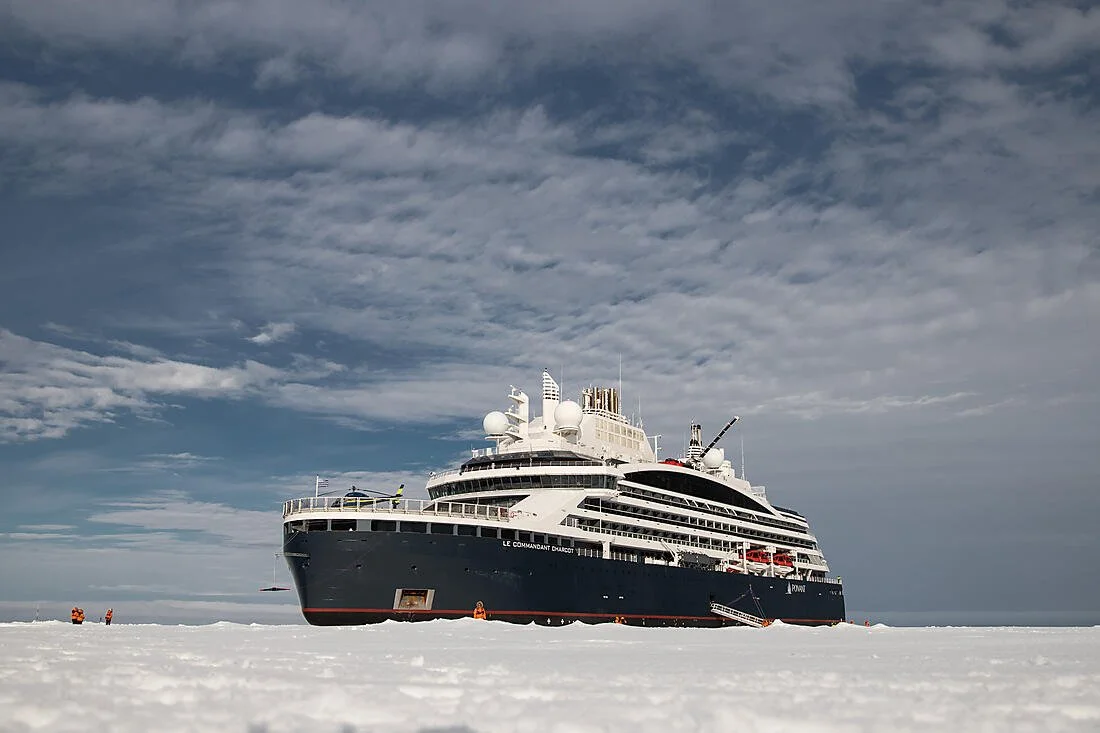
Le Commandant Charcot is a Polar Class 2 vessel built for these conditions. It uses hybrid-electric propulsion powered by liquefied natural gas and includes scientific laboratories used by visiting research teams.
Much of the voyage is spent watching the ship find its way through changing ice conditions. Sometimes it follows open leads between the floes. At other times, the bow pushes through pressure ridges and sections of ice that appear solid until they begin to break and shift around the hull.
What current North Pole voyages look like
Current PONANT North Pole itineraries begin and end in Longyearbyen, Svalbard, although the full travel package may also include charter flights and transfers through Paris.
Voyage length varies by departure. Current seasons include itineraries of roughly 13 to 17 days, along with longer routes that combine the North Pole with Greenland.
This is not a cruise with a fixed list of ports and scheduled arrival times. Sea ice, weather, wildlife, and the ship's progress all affect the daily plan. The expedition team may adjust activities or change course as conditions develop.
The Geographic North Pole is the goal, but travelers should understand that extreme polar travel cannot be promised in the same way as a scheduled Caribbean port call. The captain and expedition leader make decisions based on safety and the conditions they encounter.
What happens at 90 degrees north
Once the ship reaches the Geographic North Pole, the crew confirms the position and the expedition team usually marks the occasion onboard. Because all lines of longitude meet there, every direction from the Pole is south and conventional time zones have little practical meaning.
If the ice is safe enough, guests may be able to leave the ship and step onto the frozen Arctic Ocean. Activities can include photographs at the symbolic top of the world, hiking or snowshoeing, kayaking, Zodiac outings, and a polar plunge. Everything depends on the weather, ice, and safety conditions that day.
The polar plunge is optional and closely supervised. Guests enter the Arctic water briefly and are helped out almost immediately.
For many travelers, the most memorable part is simply standing on sea ice at a coordinate rather than in a country. There is no visitor center or monument, just the ship, the expedition team, and the surrounding Arctic Ocean.
Wildlife is possible, but never guaranteed
The central Arctic Ocean supports wildlife, but animals are spread across a huge area. Polar bears may be seen on the pack ice, and travelers may also encounter seals, whales, and seabirds depending on the route and conditions.
Some itineraries also spend time around Svalbard before or after the push north, creating additional opportunities for wildlife viewing and High Arctic scenery. Even so, no responsible expedition company can promise a polar bear sighting.
Travelers should be comfortable booking the voyage for the North Pole, the icebreaker experience, and the Arctic environment rather than for one specific animal. A polar bear sighting may become a highlight, but the trip still needs to feel worthwhile without one.
The expedition team fills much of the time at sea with lectures and informal interpretation. Naturalists, historians, scientists, and polar specialists explain the wildlife, sea ice, climate, navigation, and history of North Pole exploration. The ship also supports scientific work in regions that are difficult for research teams to reach by other means.
What the ship is like
The older image of North Pole tourism was a powerful working icebreaker with practical cabins and limited amenities. Le Commandant Charcot offers a much more comfortable version of the trip.
The ship combines true icebreaking capability with private-balcony accommodations, dining venues, lounges, wellness facilities, pools, and a higher level of service than many travelers expect on an expedition this remote.
It still operates as an expedition base and research platform, but guests do not have to give up comfort to reach 90 degrees north. That combination is also one reason the trip is expensive.
Who this trip is for
A North Pole expedition is one of the most expensive cruise experiences available. Entry-level fares typically run well into five figures per person, and suites can cost considerably more. Travelers also need to account for flights, hotels, insurance, and other trip costs, even when charter flights and transfers are included in the package.
It is not automatically the best first polar trip. Someone mainly interested in polar bears may get more wildlife-search time on a Svalbard-focused itinerary. Travelers interested in local communities and culture may prefer Greenland or the Canadian Arctic. Antarctica often offers more frequent wildlife sightings and a more varied schedule of landings.
The North Pole is best suited to someone who cares about reaching 90 degrees north, wants to see a true icebreaker at work, and is comfortable with the uncertainty that comes with an extreme expedition.
Many guests have already traveled to Antarctica, gone on safari, or completed another major expedition. Others choose it simply because reaching the top of the world has been a longtime goal.
Poseidon's former North Pole voyage
Poseidon's historic itinerary still appears in older articles, videos, and traveler reviews. It departed from Murmansk aboard 50 Years of Victory, reached the Geographic North Pole, and usually included time around Franz Josef Land.
Poseidon's current and announced polar seasons are built around Sea Spirit, the only ship listed in its fleet. Sea Spirit is used for Antarctica, Svalbard, Greenland, and other polar routes, but it is not the type of heavy icebreaker required to push through the pack ice to 90 degrees north.
Unless Poseidon gains access to another suitable icebreaker, the former Murmansk route should be viewed as part of the company's history rather than a temporarily paused itinerary.
Travelers planning a North Pole trip today will instead be comparing PONANT departures, cabin categories, voyage lengths, included logistics, and whether they prefer a dedicated round-trip North Pole itinerary or a longer voyage that also includes Greenland.
How to start planning
North Pole departures are limited, and the total cost is significant. Before booking, compare the exact route, number of nights, cabin category, included flights and transfers, insurance requirements, cancellation terms, and mobility expectations.
It is also worth deciding whether the North Pole itself is the goal or whether another High Arctic itinerary would provide more of the wildlife, culture, or scenery you want from the trip.
Yes, the Geographic North Pole is a real travel destination. There is no permanent dock or visitor center waiting at 90 degrees north, but there is a passenger icebreaker capable of taking travelers there.
Plan a North Pole expedition
Is the Geographic North Pole the right Arctic trip for you?
We can compare current departures, cabin categories, included logistics, total trip costs, and other High Arctic options before you book.
Start Planning Your Expedition