
When to Go to Antarctica: A Month-by-Month Guide to the Expedition Season
Antarctica has a short visitor season, but that does not mean every departure delivers the same trip.
Some expedition voyages begin in late October, while the main Antarctic Peninsula season runs from roughly mid-November into early March. Across those months, the sea ice changes, penguin colonies move through their breeding cycle, whales arrive to feed, daylight begins to shorten, and certain routes become more or less achievable.
As a Poseidon Certified Polar Advisor and Quark Polar Pro, we spend a great deal of time explaining that there is no single best month for Antarctica. There is a best period for fresh snow and dramatic ice, a best period for penguin chicks, a best period for whale-focused travel, and a best period for travelers hoping to balance the experience with seasonal value.
Those are not always the same departure dates.
Holiday departures, solo cabins, suites, triples, specialty activities, and highly specific routes may need to be reserved 12 to 18 months ahead. Closer departures can still be available, but the best match between month, ship, cabin, and itinerary usually comes from beginning early.
When is the best time to visit Antarctica?
For most first-time travelers, the best time to visit Antarctica is between November and February. The right month within that window depends on what you most want to experience.
Choose late October or November for more snow, heavier ice, penguin courtship, and an early-season atmosphere. Choose December for long daylight and the beginning of chick season. Choose January for active penguin colonies and some of the mildest conditions of the summer. Choose February or early March when whales are the strongest priority and you are comfortable trading pristine snow for a later-season landscape.
No month guarantees a particular animal, landing, channel, or ice condition. Antarctica remains an expedition, and weather, sea ice, wildlife, and local restrictions shape the daily plan.
The best departure is the one that matches the wildlife, scenery, route, ship size, and activity level you care about. A lower fare is not useful if it places you in the wrong phase of the Antarctic season.
Antarctica at a glance by month
| Travel period | Best for | What to know |
|---|---|---|
| Late October | Specialized early-season routes and heavy ice | Very limited departures. Best suited to travelers intentionally choosing an unusual route such as an emperor penguin expedition. |
| November | Fresh snow, sea ice, photography, and courtship | Penguin colonies are forming and nesting. Whales are possible but generally become more frequent later. |
| December | Long daylight and the beginning of chick season | Exact dates matter. Holiday departures carry strong demand and premium pricing. |
| January | Penguin chicks and active colonies | Peak season brings long days, mild summer conditions, and the highest demand. |
| February | Whales, fledging chicks, and access farther south | Less pristine snow, but often the strongest all-around period for whale-focused travelers. |
| Early March | Whales, later light, and end-of-season atmosphere | Fewer ships operate, temperatures fall, and available routes narrow. |
The edge of the season
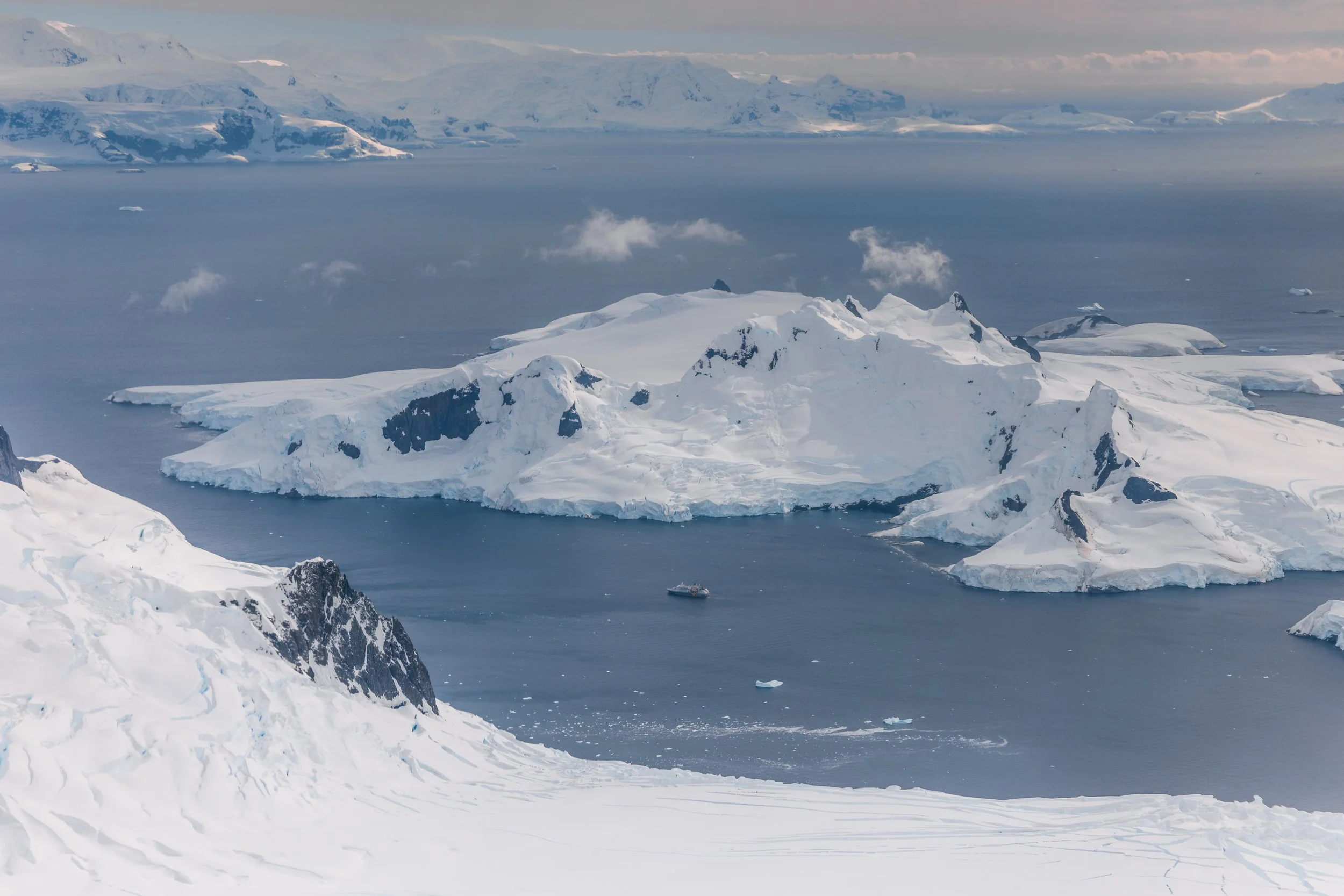
Selected specialized voyages operate amid extensive snow and sea ice. Access can be limited, but the scenery can feel exceptionally wild.
Snow, ice, and courtship
Penguins return to colonies, build nests, and compete for pebbles. Early-season landscapes are the main attraction.
Hatching begins
Long daylight and the transition into chick season make exact departure dates especially important.
Busy penguin nurseries
Colonies are active and chick-filled, while peak-season demand makes early reservations important.
The whale-focused window
Whale sightings often become more frequent, chicks begin fledging, and reduced ice may improve access farther south.
A quieter late-season mood
Whales can remain strong, light becomes more varied, and the number of available departures begins to narrow.
Late October: the true edge of the season
Late October is not a normal extension of November. Only selected operators and specialized itineraries depart this early, so travelers should not expect the same range of ships and routes available later in the summer.
The appeal is ice. Winter has only recently loosened its grip, and the landscape may hold extensive snow and sea ice. This can create extraordinary scenery, but it can also limit access to channels and landing sites. Late October is especially relevant for certain emperor penguin expeditions to the Weddell Sea and Snow Hill region rather than a standard first-time Peninsula cruise.
November: ice, snow, and penguin courtship
November is the classic early-season choice. Snow is generally fresher, ice can be more prominent, and the continent feels newly opened after winter. On many Peninsula routes, penguins are returning to colonies, choosing nest sites, courting, laying eggs, and stealing pebbles from neighboring nests.
The exact breeding calendar varies by species and location, so it is too broad to say there are never chicks in November. On a typical Peninsula voyage, however, chicks are not yet the central wildlife story. Travelers choosing November should be more interested in snow, ice, courtship behavior, and the atmosphere of early-season exploration.
Whales can be seen, but sightings generally become more frequent later in the summer. Some November departures may price more favorably than holiday and peak-season sailings, although fares depend on the ship, cabin, and itinerary.
December: long daylight and the start of chick season
December is a transition from courtship and incubation into hatching season. Penguin eggs begin to hatch at different times across the Peninsula and sub-Antarctic islands. A departure in early December may look different from one over Christmas or New Year, so travelers focused specifically on chicks should compare exact dates rather than simply choosing the month.
Daylight is exceptionally long near the summer solstice, giving expedition teams more usable light when weather and local conditions cooperate. The landscapes still retain substantial snow, while wildlife colonies become increasingly active.
Demand rises sharply. Christmas and New Year departures are among the most sought-after and expensive sailings of the season, and they often require the earliest planning.
January: active colonies and peak demand
January is the heart of the Antarctic summer and the clearest choice for travelers picturing busy penguin colonies filled with chicks.
The colonies can be loud, active, and constantly in motion as adults travel between nests and feeding areas. Chicks grow quickly, gather in groups, and chase returning parents for food. Conditions vary by species and site, but January generally offers the most reliable version of the baby-penguin experience travelers imagine.
Long daylight continues, temperatures are often among the mildest of the visitor season, and whale activity builds as more animals feed in Antarctic waters. The trade-off is demand. January is firmly within peak season, and popular cabins, activity spaces, and small-ship departures may disappear well in advance.
February: whales, fledging chicks, and access farther south
February is the strongest all-around period for travelers placing whales near the top of the list. Humpback and minke whale encounters often become more frequent as the feeding season progresses. Travelers may see whales from the ship, during Zodiac cruising, or near feeding areas, but no specific behavior or close encounter can be promised.
The penguin story changes as chicks grow, fledge, molt, and begin entering the water. Leopard seals may patrol near colonies and shorelines, creating the possibility of dramatic predator-and-prey encounters that remain entirely unscripted.
There is often less sea ice than earlier in the season, which may improve access farther south and contribute to more Antarctic Circle itineraries. That does not guarantee a crossing. Wind, ice, and weather can still alter the route.
The snow around heavily visited colonies will no longer look untouched, and February does not deliver November's pristine visual atmosphere. Some departures may offer better seasonal value than Christmas and January, depending on the operator and cabin category.
Early March: whales and a late-season atmosphere
Early March is the late-season choice, with fewer departures and a noticeably different mood. Whale watching can remain excellent, penguin chicks may still be molting or preparing to leave the colonies, and the shorter days create the possibility of more defined sunrises, sunsets, and evening light than travelers see near midsummer.
Temperatures begin to fall, weather can feel more changeable, and the season starts winding down. Not every operator continues through March, so ship and route selection narrows.
For travelers who prioritize whales, later light, fewer peak-season dates, and possible seasonal pricing over fresh snow and newly formed colonies, early March can be a strong fit.
The specialty experiences that set the calendar
South Georgia and the Falkland Islands
South Georgia and Falklands itineraries add far more than extra days to an Antarctica voyage. They introduce immense wildlife colonies, exploration history, and a very different landscape.
King penguins follow a long breeding cycle, which means colonies can contain birds and chicks at different stages. Fur seal activity is especially intense during the early part of the season, and conditions at particular beaches can affect landing plans.
The best date depends on whether the priority is breeding behavior, king penguin colonies, elephant seals, seabirds, whales, or the broader combination. Read our guide to deciding whether South Georgia is worth the additional time before choosing the month.
Emperor penguins
Emperor penguins are not normally found on standard Western Antarctic Peninsula itineraries. Seeing them requires a specialized expedition, most famously to the Snow Hill Island colony in the Weddell Sea. Current Quark Expeditions programs use helicopters to reach the area when ice and weather permit, with departures concentrated in November.
Even on a purpose-built emperor penguin voyage, reaching the colony cannot be guaranteed. Sea ice, visibility, wind, and safe helicopter operations determine what is possible.
Antarctic Circle crossings
The Antarctic Circle sits at approximately 66 degrees 33 minutes south. Crossing it appeals to travelers who want to venture beyond the standard Peninsula route, but it requires a longer itinerary and favorable conditions.
Circle voyages are commonly scheduled from midsummer into the later part of the season, when reduced sea ice may improve access farther south. The ship can still be turned back or rerouted by ice and weather, so the crossing should be treated as an expedition objective rather than a guaranteed port.
Photography
November appeals to photographers who want fresh snow, prominent ice, and a cleaner early-season landscape. December and January bring long daylight and active colonies. February and March may provide stronger whale opportunities and more distinct sunrise and sunset light.
The best photography month depends on the subject. Choosing only for scenery can lead to disappointment when the traveler's real dream was penguin chicks or whales.
The Antarctica dates most travelers overlook
Late November can provide a useful balance of early-season ice and improving wildlife activity without holiday pricing. Early December may offer hatching activity before the most expensive festive departures. February can combine whales, maturing penguin chicks, and broader access without the same holiday pressure as late December.
The best-value departure is not automatically the lowest advertised fare. It is the sailing that still delivers the wildlife, route, ship size, cabin, and activity opportunities that matter to you.
How to choose the right Antarctica month
In our experience, the decision becomes easier when you answer four questions:
- What is the single wildlife or landscape image you most want to bring home?
- Would you rather see fresh snow and courtship behavior, active chick-filled colonies, or whales feeding later in the season?
- Are you choosing a classic Peninsula voyage, South Georgia and the Falklands, an Antarctic Circle route, or a specialized emperor penguin expedition?
- How flexible are your dates, budget, cabin category, and available vacation days?
Once those answers are clear, the calendar stops feeling like guesswork. November is not simply the cheaper version of January. February is not January after the best part has ended. Each period delivers a different phase of the Antarctic summer, and the best departure is the one that aligns with the reason you wanted to go in the first place.
We match the month to the experience you are picturing, then compare the ships, cabins, routes, sea crossings, included gear, and activity availability within that window.
Frequently asked questions
Wildlife timing, sea ice, weather, landing access, breeding cycles, itinerary operations, and pricing vary by year, species, site, operator, and exact departure. No wildlife sighting, landing, route, Antarctic Circle crossing, or emperor penguin visit can be guaranteed.
Choose the experience before choosing the month
Tell us what you most want to see, when you can travel, and how much time you have. We will compare the months, ships, routes, cabins, and complete expedition logistics.